
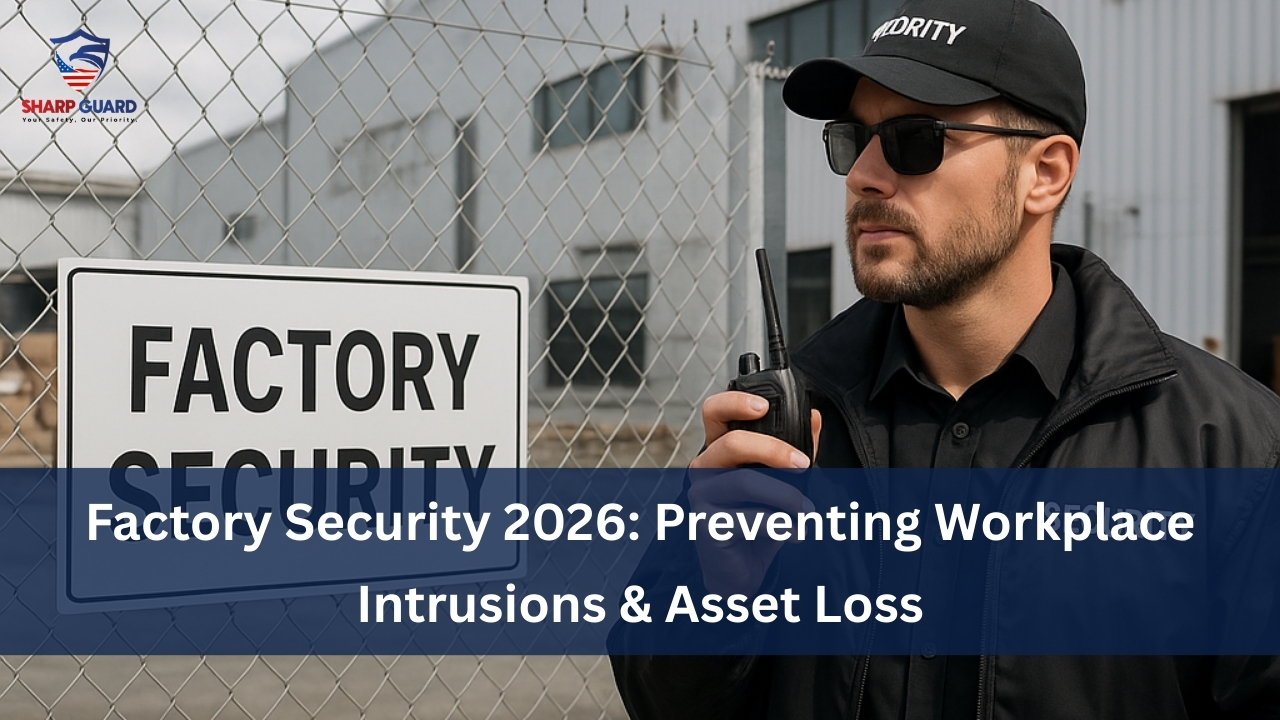
In 2026, factory settings will be more complicated and open. The factories currently keep the high-value equipment, raw materials, and delicate production information. Consequently, security threats are not only restricted to mere theft but also unauthorized access and workplace disruptors.
Many decision-makers now research Factory Security Guard Services before a problem occurs. The business owners desire to have trustworthy details that can assist them in becoming aware of risks and prevention strategies. Thus, the current factory security planning is concerned with visibility, control, and proactive protection instead of reaction.
This guide indicates the transformation of factory security in 2026.
Understanding Factory Security Risks in 2026
Factories face increasing factory security risks due to open layouts and multiple access points. Warehouses, loading docks, and production floors are prone to operating long hours. It is due to this that it becomes easy to breach access without being adequately monitored.
In addition, workplace security threats now include internal risks such as employee negligence. The lack of visitor control and old ways of doing things is an invitation to loss. As a result, companies should be aware of the weaknesses and only then choose the solutions.
Effects of Workplace Intrusions on the manufacturing facility
Intrusions at the workplace cause disruption to work and also pose security risks. Intruders can get into restricted areas, destroy equipment, or take over materials. Such accidents tend to cause production delays and unforeseen losses of money.
Besides, recurring intrusions undermine employee trust and spirit. Workers feel unsafe when employee and visitor security is poorly managed. Thus, intrusion prevention is a direct contributor to the workforce stability and efficiency.
Asset Loss Prevention as a Core Security Priority
Factories rely on cherished equipment and inventory. The problems of theft and vandalism result in severe operational losses. That is why asset loss prevention is a core concern for modern manufacturers.
Effective industrial asset protection focuses on deterrence and monitoring. Criminals reduce when their actions are monitored and observed by the security systems. This means that business enterprises save on investments and, at the same time, ensure that workflows are streamlined.
Role of security guards in factory settings.
The element that is still needed in industrial security is human presence. Technology helps in monitoring, and guards offer judgment and response. Many facilities rely on industrial security guards to observe activity and manage access.
Trained guards also support industrial site patrol services across large properties. They react to any suspicious activity on a real-time basis. Therefore, physical presence minimizes the cases before they get out of control.
Assimilating Surveillance and Monitoring Systems
Modern factories rely on factory surveillance systems to track activity. Cameras are used to capture incidents and facilitate investigation. Surveillance, however, is best complemented by trained supervision.
Continuous 24/7 factory security monitoring improves response time. It also assists in identifying the abnormal patterns at an early stage. Thus, consolidated systems enhance the general level of security awareness.
Access Control in the Multisite Manufacturing Plants.
Access control is a significant factor in the safety of factories. Repeated intrusions occur in facilities that have poor controls. Strong plant access control limits entry to authorized personnel only.
In addition, factory perimeter security protects boundaries and delivery zones. Checkpoints, gates, and patrols lead to layers of defense. This leaves factories in order, with no interference with the running of the plants.
Security Trends that will shape Factories in 2026
Manufacturers now adopt factory security trends 2026 that focus on prevention. Companies are more about planning rather than responding. This change enhances the long-term protection.
Many plants also explore smart factory security systems in 2026 for better visibility. Such systems promote the speed of choices and decrease blind spots. Therefore, factories are safer and more efficient.
How to prevent Theft and Vandalism in industrial settings.
Theft is a significant issue for factories all over the world. Factory theft prevention requires visibility, control, and trained personnel. Lax security is an attraction to the recurrent offenders.
Why a Layered Security Approach Works Best
When Factory Security Guard Services operate alongside monitoring systems, protection improves. Guards confirm warnings and deal with accidents directly. Because of it, businesses minimize false alarms and response delays.
Supporting Employee safety and Business continuity
Security has a direct impact on employee welfare. The employees feel secure when threats are managed. Strong warehouse and factory security supports daily operations without interruptions.
In addition, compliance and trust are enhanced by safety planning. Manufacturers secure individuals and properties. Thus, business continuity planning involves security.
Conclusion
In the year 2026, factory security is something that needs to be aware of, plan for, and prevent. Intrusion and loss of assets pose severe threats to manufacturers. Threats can be well reduced by businesses that are aware of them.
Factories enhance safety by paying attention to the protection, access control, and monitoring of the factory. Factory Security Guard Services support visibility and response in complex environments. Finally, informed security planning ensures assets, staff, and long-term business.