
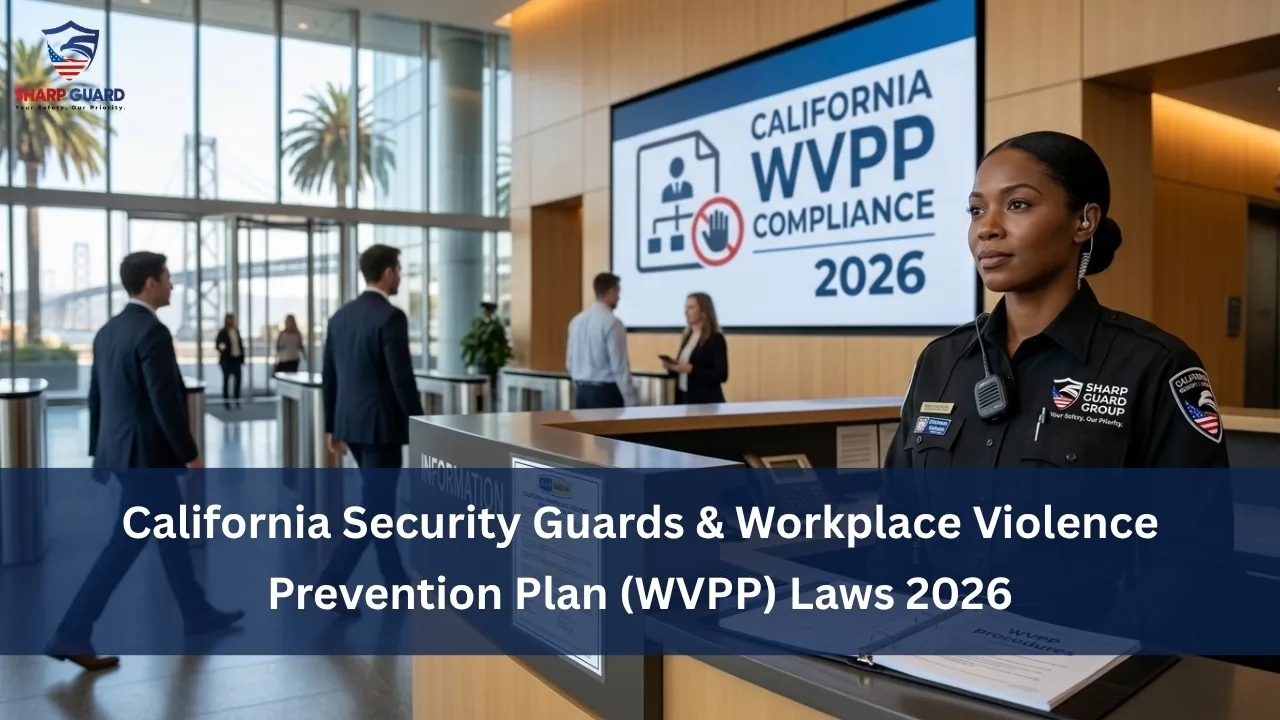
One of the most significant issues that California employers will face by 2026 is workplace violence. This implies plan on paper, training of employees, logs of incidents, as well as documented compliance is now mandatory in any industry. It begs an immediate and practical question to many business owners where security guards realistically fit into all this.
Here, in this guide, we are going to take step-by-step what the California law of workplace violence prevention enforces. We will also describe how security guards can help with compliance and what a robust, integrated plan would look like. In the end, you will have the right idea of what your business must do and how to do it.
What Is California’s Workplace Violence Prevention Law?
SB 553 Overview and Effective Date
The Senate Bill 553 of California is among the major expansions of workplace safety seen in the state in years. The bill became effective on July 1, 2024, and California was the first state in the United States to mandate the employer to possess a written workplace violence prevention plan. SB 553 requires virtually all California employers to prepare, adopt, and keep a written WVPP.
Who Must Comply With This Law
SB 553 covers nearly all employers in California with a few exceptions. Certain remote workers acting individually, as well as law enforcement agencies, are also subject to certain carve-outs. To most businesses, however, compliance is not optional and it must happen immediately. Employers who are yet to come up with a compliant WVPP are already acting beyond the law.
What Happens If Employers Don’t Comply
In addition to the fines, a workplace violence event in a business that does not have a valid WVPP exposes it to a significant civil liability risk. Injured employees in an avoidable workplace violence incident have potential legal claims. Non-compliance always costs more than constructing an adequate plan in the beginning.
What a California WVPP Must Include
Written Plan Requirements
The law of California mandates that all employers must possess a written workplace violence prevention plan at their work place. This plan should recognize those individuals who will be enforcing and sustaining it at the organizational level. The action plan should also establish how the employer will probe violent incidences and rectify the perceived hazards.
Employee Training Requirements
The California law obliges employers to offer training to every worker on preventing workplace violence in the workplace. This training should include the employer specific WVPP, reporting of incidents, and warning signs. Training should occur on the initial launching of the plan and then on a yearly basis year after year.
Reporting and Recordkeeping Standards
In addition to the violent incident log, employers have to keep records of all training sessions related to the WVPP. The records should contain the training dates, the training subjects and the names of employees who attended the training. Employers should also record any workplace violence hazard assessment they have and corrective measures.
Types of Workplace Violence Under California Law
Type 1 Criminal Intent Violence
Type 1 violence is the violence of people who are not directly related to the workplace. This involves robbery, active shooter, and random criminal activities against the employees or customers. Among the most widespread targets of this kind are retail businesses, banks and late-night operations. Access control and visible deterrence are essential when it comes to preventing Type 1 threats at the workplace.
Type 2 Customer or Client Violence
Type 2 violence is one that is characterized by customers, clients, patients or members of the public who are in contact with the employees. This is most common in healthcare settings, social service agencies, and customer-facing retail settings. It is this kind of violence that most employers in California have to deal with in their daily activities.
Type 3 Worker-on-Worker Violence
Type 3 constitutes employee to employee violence, such as threat, harassment and physical fights at the work place. This type is not always reported as employees are afraid of being retaliated against or simply fail to consider some of the behaviors as workplace violence.
Type 4 Personal Relationship Violence
Type 4 is the kind of violence is a result of personal relationships and workplace. One of the most typical ones is a domestic violence situation in which an employee is followed to work. The presence of security guards at the points of entry is very important in controlling such a type of threat.
How Security Guards Support Workplace Violence Prevention
Access Control and Entry Monitoring
Control of access is one of the most direct contributions security guards can make to prevent workplace violence. Entry guards control who gains access to a building, and can label people who express concerns. Guards incorporated into an access control part of a WVPP reinforce this aspect greatly.
De-Escalation as a First Response
The training of security guards introduces skills of de-escalation which are directly applicable in the prevention of violence in the workplace. Instead of getting a tense situation off-hand, professional guards apply verbal tactics to defuse and redirect. This strategy helps to avoid numerous cases when a physical confrontation or violence may occur.
Visible Deterrence and Early Threat Detection
The obvious availability of a security guard alters the perceptions of potentially dangerous people to an environment. Individuals who think of engaging in violent or threatening conduct are less prone to doing so when they are in the presence of trained security personnel.
Emergency Response and Incident Documentation
Security guards offer a trained and swift response when a workplace violence does take place. They are able to activate emergency measures, call the police and control the scene until the arrival of aid. This paperwork aspect renders security guards a viable compliance partner, not a mere physical presence.
Industries With the Highest Workplace Violence Risk in California
Healthcare and Hospital Settings
The level of workplace violence among healthcare workers is much higher than in the majority of other occupations. There are specific California regulations that relate to healthcare, but the rules of workplace violence prevention are universal. Healthcare security guards require specialized training on how to interact with patients and how to de-escalate them.
Retail and Customer-Facing Businesses
Retail workers have frequent contact with people and work in conditions that get out of control. Waiting lines, refused refunds, and violence because of stealing all add to the risk of violence in retailers. SB 553 directly applies to retail employers, as they now have to document and train concerning these particular risks.
Education and Campus Environments
The threats of workplace violence in schools, colleges and training facilities have their own set of threats. The education sector in California needs to adhere to the requirements of SB 553 to the letter in terms of written plans and training of employees. Campus security staff also supports access control, incident response, and staff awareness initiatives.
Government and Public Sector Facilities
Visitors to government buildings and offices in the public sector are very varied and unpredictable in daily occurrence. Those who have legal problems, money troubles or complaints against agencies can easily turn volatile. California has introduced SB 553 that requires employers in the public sector to adhere to it and to report their prevention activities in detail.
Building a WVPP That Includes Security Guard Integration
Risk Assessment and Threat Identification
The first hand knowledge of the threat patterns can help a security provider to make a positive contribution in this assessment process. The determination of the most probable type (or types) of workplace violence in a particular place is what influences the overall plan. Even the best-written plans are likely to overlook the most pertinent risks in practice without this foundation.
Defining Guard Roles Within the Plan
A WVPP involving the security guards must clearly spell out the duties of the guards in the plan. These are part of their access control, incident response, log documenting, and communication to employees. Defined roles eliminate confusion when there is a real incident and clear direction is crucial. They also assist in showing Cal/OSHA that the employer has incorporated the aspect of security in their general prevention approach.
FAQs
What should a California WVPP contain?
An on-site-specific written plan, a record of violent incidents, training of employees on an annual basis, documentation of hazard assessment, and reporting policies that guard the employees against retaliation.
How can workplace violence be prevented by security guards?
All of these elements of a compliant WVPP are supported by access control, de-escalation, visible deterrence, early threat identification, and incident documentation, which directly align with prevention and response aspects.
In what industries does California WVPP have to be used?
Almost all industries are encompassed, such as retail, education, government, as well as most employers in the private sector, with healthcare facilities having a different but similar set of Cal/OSHA regulations.
Conclusion
The workplace violence prevention requirements contained in SB 553 are a factual and current compliance requirement to employers in California. The written plan, the violent incident log, and annual training are not mere extravagances but are a legal requirement that has practical ramifications when not followed.
When employers consider security personnel in their WVPP, they develop a more robust and defensible plan compared to those that view security as an independent function. Sharp Guard Group is the top security guard company in Los Angeles offering training services to security personnel. Their security guards know very well about California SB 553 and workplace violence prevention measures.