
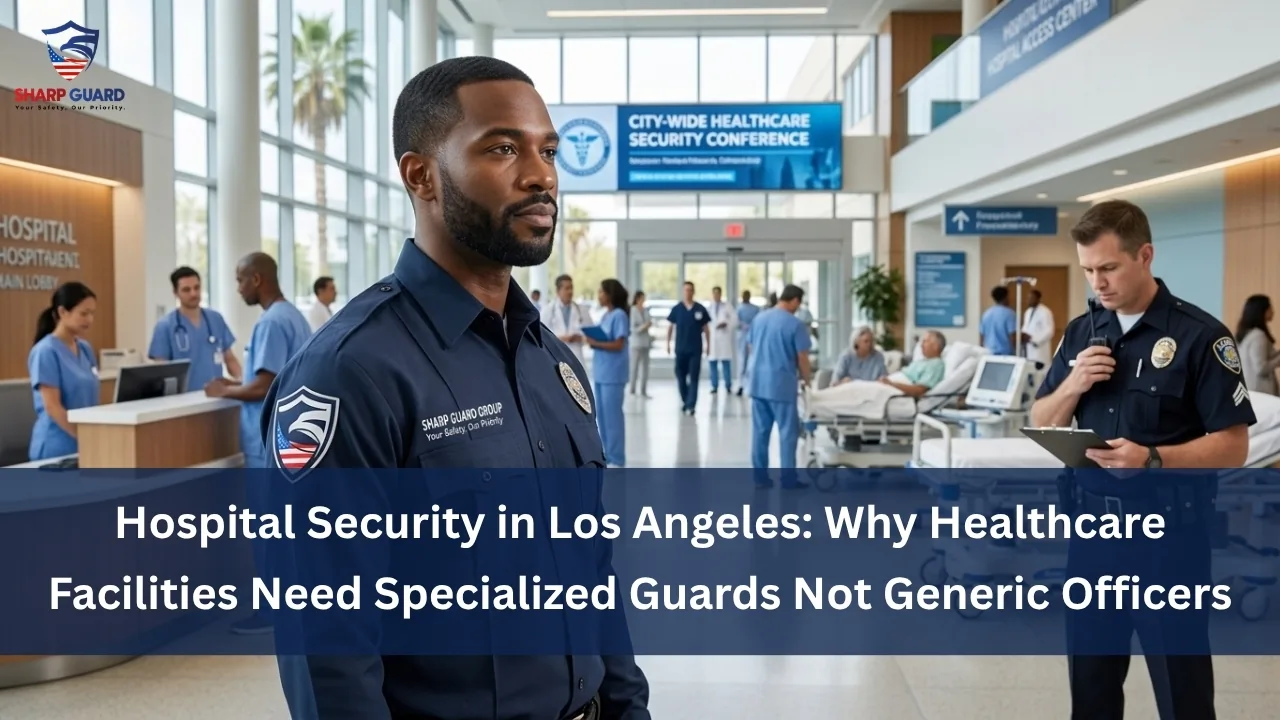
It is not like walking into any other type of building when entering a hospital. Patients are weak, people are highly emotional and employees are handling matters of life and death 24/7. The demands of security in this setting are totally different than those of retail or office security. Even a generic guard who is trained to guard a parking lot is not prepared to what healthcare facilities are going through.
In this guide, we’ll break down why healthcare facilities need guards with specific training and experience. We will discuss the special risks, the compliance considerations the guards will need to be aware of and how to assess the providers appropriately. In the end, you will have a clear understanding of what quality healthcare security really entails.
The Unique Security Environment of Healthcare Facilities
High-Stress Environments Around the Clock
Hospitals are open 24 hours and also Emergency departments check patients and family members 24/7. The resulting ever-present intensity poses security issues that are not present in most other environments. The guards in such places must remain calm even when under pressure. Such calmness does not occur spontaneously, without special training and preparation.
Diverse and Vulnerable Patient Populations
The healthcare facilities cater to patients with a broad range of physical and mental disorders. Others might be under the influence of substances upon arrival to get treatment. Guards should identify such situations and react in a manner that does not further intensify such situations. This needs a certain sensitivity and clinical awareness which generic training just fails to offer.
Multiple Entry Points and Open Access Areas
Hospitals are not closed systems with the single entrance. They have emergency exits, visitor lobbies, parking buildings, and areas of staff working at the same time. It takes a keen coordination and understanding to be able to manage all of these points. This complexity is not always well managed by generic guards who do not usually have the training. The specialized healthcare security personnel know how to prioritize and coordinate with the entire footprint of a facility.
Why Generic Security Guards Fall Short in Healthcare Settings
Lack of Healthcare-Specific Training
An average security guard course includes overall surveillance, access control, and incident response principles. What it fails to address is how to deal with a violent patient in a hospital corridor. It does not discuss the communication with clinical staff during a Code Gray. It does not train a guard to work in an emergency room on a Friday night with all the emotions. In the absence of this particular preparation, even a technically qualified guard may be a liability in a healthcare facility.
Mishandling Sensitive Patient Situations
Physical intervention is a common default mechanism of generic guards when they believe that a situation is getting out of control. This reaction may be disastrous to patients in a healthcare setting. The trespasser in a parking garage will not require the same approach as a patient having a psychiatric episode. Any misinterpretation of such a situation may result in harm, trauma, and serious legal consequences to the facility. Providers of
hospital security services Los Angeles know that restraint and de-escalation should precede nearly all situations.
HIPAA Compliance Risks
Healthcare facilities have security personnel who frequently come across sensitive patient information. They may overhear their conversations between staff and patients, look at medical records or be on the treatment discussion. Generic guards do not receive training on the HIPAA requirements and might not be aware of what is considered a privacy violation. Disclosure or mismanagement of secured health data, whether intentionally or unintentionally, puts the facility in serious legal repercussions.
What Specialized Hospital Security Guards Are Trained to Do
De-Escalation in Clinical Environments
De-escalation is a fundamental ability of any security professional, yet healthcare environments demand a more sophisticated approach. The guards should know how to quiet a family member who is in distress in a waiting room without disturbing the environment. They must come to an agitated patient in a non-agitating manner without causing more distress. This involves the use of certain language, awareness of body language and sincere empathy as professional tools. This type of training is a base of work of hospital security services Los Angeles specialists.
Managing Psychiatric and Behavioral Health Situations
Patients in acute mental health crises are a routine occurrence in psychiatric units and in emergency departments. The guards who operate in these places require particular training in the field of mental health awareness and proper reaction. This encompasses when physical intervention is suitable and when it complicates things even more.
Working Within Medical Protocols and Hierarchies
A guard who is disrespectful to a nurse by weakening his/her authority or opposing a physician is a source of friction which influences patient care. Specialized guards are knowledgeable of their role in the overall operation of the facility. This awareness as a professional renders them much more efficient members of the care environment.
The Biggest Security Risks Facing LA Hospitals Today
Workplace Violence Against Healthcare Staff
Workplace violence is disproportionately high in healthcare workers than in other jobs. Nurses and staff of emergency departments are especially susceptible to verbal and physical attacks. This is one of the most pressing issues that are acknowledged by hospital security services Los Angeles providers.
Unauthorized Access and Visitor Management
Security is always an issue of controlling the access of various areas of a hospital. All visitors do not need to be able to access all the areas in a facility. Illegal entry of patient floors, medication rooms, or other areas restricted to staff poses real danger. The restricted areas are properly controlled by special guards who check in the visitors and monitor them.
Infant and Patient Abduction Prevention
Maternity units should have stringent measures concerning infant security in healthcare facilities. Another severe issue is patient elopement, especially when it comes to psychiatric or dementia patients. These risks necessitate certain training in the area of monitoring, identification systems, and quick reaction.
Drug Diversion and Pharmacy Security
Controlled substances are in the form of hospitals which pose a high level of theft and diversion. Pharmacy areas, medication carts, and supply rooms should be carefully and knowledgeably monitored. The security guards in these places should know what they are guarding and the way in which theft is generally done.
Hospital Security Services Los Angeles: Key Compliance Considerations
HIPAA Awareness and Patient Privacy
Security staff should be aware that patient privacy is not limited to medical records. This information is guarded by specialized guards who are trained to guard such information as part of their job. Such consciousness helps to avoid unintentional violations that may impose regulatory fines on the facility.
CMS and Joint Commission Standards
There are certain standards of security and safety that are required in hospitals that are accredited by the Joint Commission. The Centers of Medicare and Medicaid Services also have requirements regarding patient rights and safety of the environment.
Documentation and Incident Reporting in Healthcare
In a healthcare environment, incident documentation has a greater weight as compared to most other environments. Guards must ensure that they record the incidents in a detailed way that is correct and which falls up to the standards of the facility. The generic guards do not have much training to create documentation to this extent.
Specialized Services That Healthcare Facilities Require
Emergency Department Security
The greatest concentration of risk in any hospital is in the emergency departments. The volatile combination includes unpredictable patients, long wait times, and emotional family members. They can be present and thereby directly decrease violence against staff and other patients.
Parking Structure and Campus Perimeter Coverage
Security does not stop at the front door of the hospital and an all-round program is a mirror of that. Vehicle break-ins, assaults, and other cases are prevalent in parking structures. Patrols in these neighborhoods on a mobile basis ensure visibility and responsiveness.
FAQs
What should the security guards of the hospitals be trained for?
Special guards should have de-escalation education, behavioral health education, HIPAA compliance training, and work experience in clinical protocols and hierarchies.
Should HIPAA training be provided to hospital security guards?
Yes, since guards will frequently be in contact with safeguarded health data, and they need to be aware of what qualifies as a violation of privacy to prevent legal liability to the facility.
What is the approach of security guards with violent patients?
Special guarding officers focus on de-escalation as the first approach, which involves calm, non-threatening communication and non-threatening body language, followed by a progressive increase in their response in close consultation with clinical personnel.
What is a good hospital security company?
Being a quality provider is characterized by healthcare-specific training, proven experience in the same facilities, effective communication practice with clinical teams, and solid compliance awareness.
Conclusion
Security at a health care environment is actually not the same as security at any other place. Stakes are greater, populations are more susceptible and the regulatory environment requires more. In most of the settings, generic guards can perform, however, healthcare is not among them. Sharp Guard Group offers exclusive hospital security services that Los Angeles healthcare facilities can depend on. The selection of the appropriate provider is not only a security choice but a patient care choice as well.