
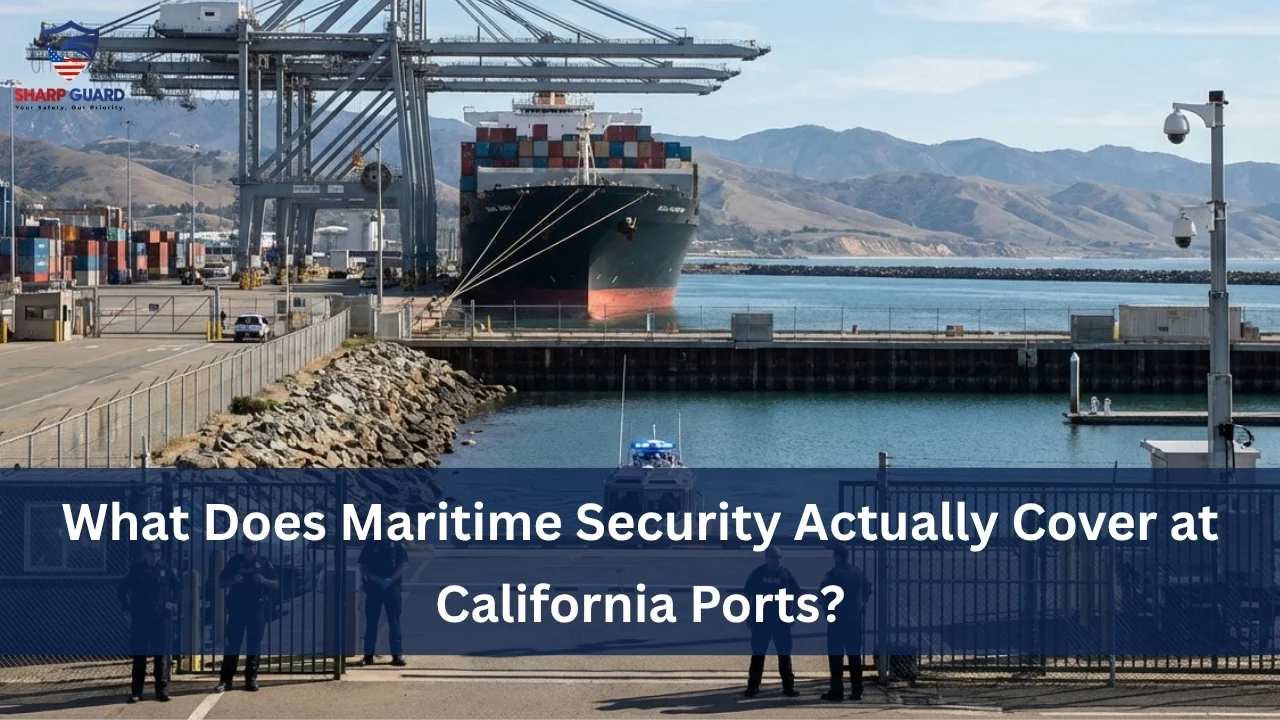
The economic well-being is based on the uninterrupted movement of the goods by these harried docks. Professional crews operate round the clock to ensure that there are no significant inconveniences to shipping. They offer a critical point of protection against contemporary piracy and cargo robbery.
The Maritime Security California Ports 2026 plans emphasize the security of world trade systems. These special services guard the extensive coastline against various threats and criminal acts. The work involves supervising all vessels entering the harbor daily.
What Is Maritime Security?
Maritime security entails safeguarding vessels and infrastructure against any physical threats. The most important actions are maintaining order and preventing unauthorized access to closed areas. The reason it differs from general security is that international law is complex.
The discipline demands a special understanding of maritime protocols and industrial safety standards. The teams need to know how to navigate large facilities and control high-traffic points of entry. All implemented measures focus on the safety of the national supply chain.
The importance of Maritime Security at California Ports.
California receives a lot of cargo and handles significant world trade. Smuggling and other criminal acts are a constant source of concern for authorities. The world today requires strong protection to keep the national and economic security of all people.
One security breach is enough to cause significant losses for local businesses. Ports serve as entry points to basic commodities that families consume in their households. Maintaining these areas will ensure the economy remains stable and highly resilient.
Entry point: Security and Access Control.
The initial step towards a safe environment is the monitoring of personnel and vehicles. The ID verification and authorization systems ensure that only individuals who have been cleared enter the docks. This procedure helps prevent unauthorized access and protect the general population from harm.
Checkpoints are installed at strategic areas to scan all the trucks transiting the gates. Guards compare paperwork with digital records to ensure each driver is who they claim to be. Tough guidelines help control traffic during the busiest times of the morning.
Ship and Port Security.
Surveillance of vessels and wharves makes the whole waterfront well-organized and highly secure. The personnel ensure that heavy containers are loaded and unloaded safely around the water. They do this to ensure that people who want to board unauthorized are prevented.
The dock is a very dangerous place where accidents may occur in a very short time now. Eyes on the water will help detect any suspicious boats heading to the main pier. The crew and cargo are safe throughout their stay due to professional supervision.
Monitoring and Surveillance Systems.
CCTV cameras and live tracking provide a digital record of all port activities. The team is immediately alerted to any unauthorized movements via alarm systems and intrusion detection. High-end technology can be used to better cover a large area.
The command centers monitor various feeds to identify possible problems in advance before they degenerate into crises. The thermal images are used to view across the fog that frequently descends into the harbor. These are the tools that serve as a force multiplier for ground guards.
Role of Security Guards at Ports
The presence may be maintained by patrolling port areas either on foot or in vehicles. These practitioners are attending to incidents and medical emergencies in a very skilled manner. They also help in safety procedures to ensure that the workforce is safe against industrial hazards.
Guards know the particular design of the docks and the dark spots. Criminals fear their presence and may try to evade digital sensors. They are the guarantors of the maritime sector in the Golden State.
Compliance with Maritime Security Regulations
All facilities must comply strictly with Coast Guard and federal regulations. Port authority regulations provide guidelines for legal and safe operation. Legal compliance is important because the business is not subject to large government-imposed fines.
Frequent audits would ensure that all security procedures meet the highest international standards. Teams stay abreast of changing laws to keep the facility in good standing. Adherence to the regulations provides a predictable business environment to every foreign business partner.
Emergency Response and Risk Management
It takes a very quick reaction and a cool head to deal with the accidents and threats. The fire safety and evacuation plans are practiced frequently so that everyone is familiar with the exits. When there is a significant crisis at the docks, coordination with the emergency services is required.
Risk management means that it is a process of determining weak areas on the perimeter prior to the problem. The drills keep the staff up to date and prepared for any potential negative situation. Being ready so that the worst happens is a sure way of having the best of the entire team.
Conclusion
Security systems are so crucial in our day and age. The skills required to ensure trade continues are the services offered by Sharp Guard Group maritime security.
Securing the docks is a serious task that demands full attention and commitment. Secure ports result in a sound economy and a safer national border. Selecting the right partner will make your maritime operations safer and more successful.