
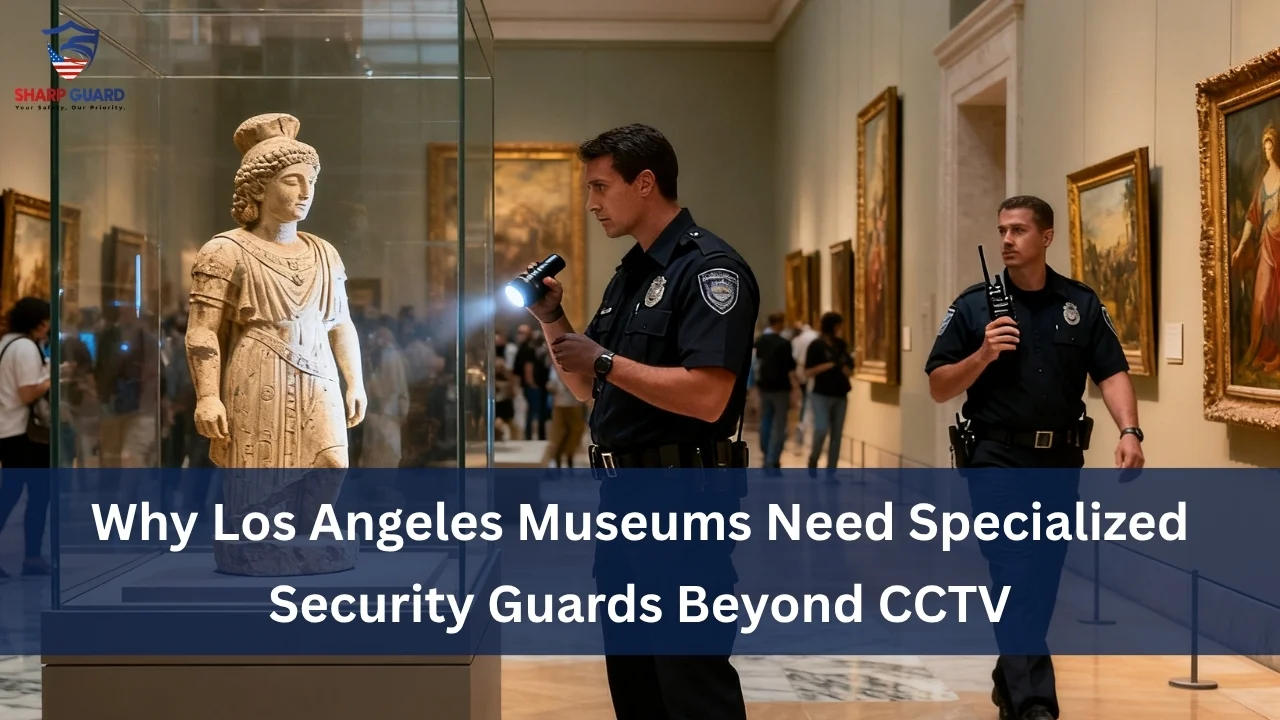
A basic camera system is not sufficient to guard such spaces. The security requirements of museums in LA keep on increasing in 2026. Tourist traffic is on the rise, the number of events is growing and the worth of collections is also growing gradually.
As a result, museum managers are also appreciating that cameras can no longer offer the kind of protection that these institutions really need. This critical gap is being filled by cultural properties museum security Los Angeles 2026. This blogpost clarifies the precise reason why specialized human security is crucial.
Why CCTV Alone Is Not Enough
Most museum administrators believe that a complete camera system will cover the necessary security areas. Nevertheless, this supposition poses risky blind spots in their protection policy. Cameras look and take note. They neither mediate, communicate nor make decisions. Hence, in real time, a camera could only record what is occurring but not prevent it.
Remote monitoring introduces delays in response, which are absolutely critical at the time of a live incident. Moreover, the camera systems that are the most sophisticated cannot reach all corners, angles, and places of entry of a large museum facility.
A trained security guard is able to read body language, context and take the necessary action immediately. Thus, the specialized guards give an extra level of protection that no surveillance system can sufficiently imitate.
Security Risks Facing Los Angeles Museums
Artifact and valuables theft.
Art theft is a worldwide issue that is still a serious and persistent concern. Small durable objects of high value such as jewelry, small sculptures, rare manuscripts, and removable decorative objects are especially prone to being lost or stolen. Moreover, advanced thieves study the layouts and security patterns of museums and then proceed to steal.
Unauthorized Access
Museums have limited archives, conservation laboratories, storage facilities, and administration. Granting unauthorized access to such areas poses a severe danger to collections and employees. They check qualifications, appointments and make sure that only individuals authorized get to sensitive parts of the building.
Large Crowds and Public Events
Museums also attract thousands of visitors at a time in the case of popular exhibitions and special events. Accidental risks of damage are introduced by overcrowding of delicate exhibits. Also, masses of people may conceal the actions of people with malicious motives. As a result, they safeguard the collection and visitor safety at peak times.
Why Museums Need Specialized Security Guards Beyond CCTV
The argument in support of specialized human security transcends camera system deficiencies by far. Guards offer active, intelligent, and adaptable protection, which is unavailable in technology.
Immediate Human Response
Specialized guards will respond promptly when an incident starts. They do not wait until a remote operator views the footage and provides instructions. This ability to respond instantly is essential in case of theft attempts, medical emergencies, and altercations of visitors. Museums where there is active guard coverage have, therefore, much better outcomes to incidents as compared to those that are only on surveillance.
Protection of Visitors and Staff
Museum security does not simply concern the protection of objects. It also entails safeguarding the thousands of individuals, who come and labor in these facilities on a daily basis. Thus, special guards receive training to deal with conflicts, help troubled visitors, and organize staff members in case of emergencies. A guard that defuses an argument between visitors secures all people around him or her.
Exhibit and Gallery Patrols
One of the best available theft and vandalism deterrence methods is visible deterrence within museum galleries. In addition, guards monitor the conduct of visitors around sensitive exhibits and take necessary measures when they see the need to. They lock down hands-off rules, send away visitors who get too close to exhibits and monitor visitors who behave in manners that cameras may capture but not respond to.
Access Control Management
The special services offered by Los Angeles museum security guards are thorough access control management. Guards check vendors that come to make deliveries, check the credentials of contractors before they can access the facility and keep track of staff-only doors all over the building. This is a human screening layer, which identifies issues that automated badge systems do not.
Conclusion
CCTVs are useful, but they will not be able to cover the Los Angeles museums and the invaluable collections completely. Cameras do not stop but document the occurrences. They ensure that they observe and not transform. Thus, professional security guards are an indispensable and invaluable aspect of any thoughtful museum security plan.
Human security practitioners offer an immediate response element, professional judgment, visitor management, and proactive deterrence which no technology can duplicate. In turn, the LA museums investing in special guard service secure their collections, their visitors, their employees, as well as their long-term institutional image. Sharp Guard Group is the best security guard company in Los Angeles protecting the museums in a good manner.